Showing posts with label * Author: Charlotte Du Cann. Show all posts

8 August 2012

People of the Butterfly

By Charlotte Du Cann

This is a piece I wrote originally for the on-line activist magazine STIR, It's a review of the second documentary about the Transition movement, which holds its annual conference in London next month on the theme, Building Resilience in Extraordinary Times. STIR is presently raising funds to print a free book, featuring a selection of their most inspiring and transformative stories, and will be distributed to the campaigners and activists who are working towards social change.
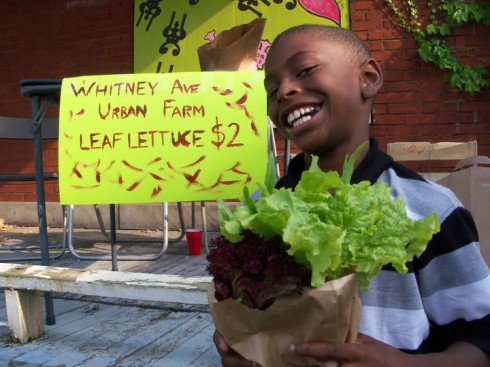
In an abandoned lot in Pittsburgh a boy is selling lettuce. Down Tooting High Street a carnival is in full swing. In a village in Portugal two men are walking in a field beside horses. In a fire station in Moss Side a film preview is taking place: “There was silence. You could have heard a pin drop. And then a sound, kind of like a pin dropping. There it is again. And again, many times in rapid succession. Then silence. Nothing.” This is Joel Prittie, writing about his experiences previewing the film, In Transition 2.0, simultaneously with eleven other initiatives worldwide in February. He’s telling us how the machine jammed, how he resolved the dilemma, and how everyone cheered at the end.

It’s a small story. These are all small stories. You might not know they are happening or take much notice of them. But if you were curious, you would discover how that lettuce came to be growing in such an unlikely neighbourhood; why everyone in the carnival was wearing clothes made of rubbish; why the elders of the village were teaching the young people to plough; why Joel Prittie, ex double-glazing salesman, knocked on 1100 doors in the rain in Manchester. If you pulled these stories together, you would notice they all had a common thread. That’s the moment you realise it’s a big story. The story in fact. The story of how people are coming together in the face of difficulties and making another kind of future.

That’s the story of Transition 2.0.

Background

The Transition movement began in 2005 in the market town of Totnes in Devon and since then has sparked off 900 initiatives worldwide. There are initiatives in cities and rural villages, towns and bioregions. Originally billed as a “community-led response to climate change and peak oil”, Transition provides a structure for communities to engage in order to become resilient in the face of these challenges. The term, borrowed from ecology, means the ability for systems to adapt and survive great shocks.

Living within a dominant corporate monoculture where communities are often fragmented and there is little mainstream media attention on these global realities, this is a big ask for most modern people. Every aspect of our industrialised lives has been made possible by cheap fossil fuels, from the clothes we wear to the food we eat. We live, however, mostly in the dark about these facts, or the effects of our daily actions on the environment. Or if we do know them, we see them as information and do not take action.

In Transition 2.0 focuses on the moves groups of people are making to look at the future squarely, to make connections with one another and to find ways to thrive in challenging times. In 2012, resilience also means the capacity to deal with Transition’s third driver, the economic crisis. The shock of the shock doctrine — the crushing blow of austerity, as people everywhere feel the consequences of our growth-at-all-costs culture and the increasing consolidation of wealth for the few.

In its typical pragmatic, positive way In Transition 2.0 doesn’t analyse this situation within a political frame. It acknowledges the big picture, and then gets down to work relocalising the neighbourhood. The film lays out the three drivers briefly at the start, then follows the track of the second book, The Transition Companion, dividing its attention on the different stages Transition initiatives go through, from the start up phase — forming a group and raising awareness — to building up local social enterprises. Rob Hopkins, the co-founder of the Transition Network, explains these stages, and the film looks at the projects that best illustrate the way Transition works.

In many ways the documentary is a tool, a showcase for people who may know nothing about Transition’s aims and structures. It is a mild watching experience, with interviews and information, and you might wonder why someone who has been involved in two initiatives and immersed in Transition communications for almost four years would have anything to find in it. What more did I need to know?

But the fact is: this is a big story. Resilient systems enforce their connections by constant feedback. You are consciously connecting with others through a vast communications network, that works like the mycorrhizal fungi in soil. I might know what is going on in the neighbourhood, but I don’t know what is going on in Portugal or Maryland. You don’t know for example that the first Transition initiative in India has created 400 vegetable gardens in Tamil Nadu. You don’t know how the co-operative Handmade Bakery in Yorkshire set up business, how the Brixton Pound (Britain’s first e-currency) works in the market, or that the mayor of Monteveglio in Italy has adopted an energy descent plan for the whole region. Most of all you realise that the crisis which up to this point has seemed academic is now very real in many places.


Unlike the first film which focused on the start up exhilarating phase of Transition, this had a darker, deeper tone. Here are initiatives who are undergoing the shocks of climate change and the collapse of top-down infrastructure. Here is Japan after the nuclear disaster, New Zealand after two earthquakes. Transition groups that had already been working together were able to respond collectively to the crisis. Thanks to the connections already made though the Lyttelton time-bank, the initiative was able to pull in help to deliver water and food all over the devastated town.

“We are setting up structures, pioneering them and putting them in place for the future,” explained Dirk Campbell of Ovesco in Lewes, Britain’s first community owned solar power station (see right). “It’s difficult and takes enormous amounts of effort, commitment and time.”

Facing the crisis

There are many criticisms of Transition. It is not political, realistic, activist enough; it is white and middle class; it lacks structure; it’s too structured, too fluffy and feel-good. It doesn’t fulfill everything. It’s true, it doesn’t fulfill everything. But you would be hard pushed to find another method that can bring diverse people together within a frame of change. There are plenty of adversarial organisations that address climate change (Climate Rush, Greenpeace) and the financial system (UK Uncut, Occupy); there are plenty of low-carbon incentives (10:10, 350.org) and urban growing projects (Growing Communities in Hackney, Abundance and city farms in Sheffield). But what Transition does is address all these aspects simultaneously. It allows for many kinds of people to sit in a room together and work out ways to proceed. What is the most important ingredient or tool in the book (87 in all)? I asked Rob Hopkins at the Twitter launch of the Transition companion. The first one, Working in Groups, was his reply.

Our number one challenge is working in groups when we have been raised in an individualist hierarchical culture, taught to be hostile to the max. The film doesn’t show the struggle that most groups go though in dealing with this, though it does talk about conflict (including the testimony of Chris Hart from Transition Lancaster that collapsed and then reformed itself successfully a year later). Nor does it show the massive fall outs that happen when an old way of doing things (my will against yours) clashes with a new (our way together). How these old structures cling on. How the new ones demand massive inner shifts, but that if you manage to hold together extraordinary things start to happen.

What it does show is how Transition as a method, culture and network brings people together to work out solutions in places suffering from massive downturn. In the Portuguese village of Amoreiras the initiative held a meeting and asked everyone to dream. The village had suffered the fate of many rural places where most of the population had left for work in the cities. The group listened to everyone’s desires and then put their collective vision into motion. They painted the whole village, set up a local market, organised a working party to bring about better healthcare.

Here is Fred Brown in Pittsburgh, a city that in the 1970s and ’80s, lost 100,000 jobs when steel mills transferred their manufacturing to countries around the world. It’s a city where marginalised low-income neighbourhoods are threatened by incoming gentrification and big businesses. In his community of Larimer, Google have recently built a new facility, benefiting from millions of urban redevelopment funds that were intended to help the residents:

“The community doesn’t need or want more experts telling them what to do. We want partners and we want help to develop and implement our dream. Transition is helping us come together, deepen the vision, create working groups, get practical work done, and understand community-wide needs. It is also giving us language and a process for negotiating with those who seek to take, or to give on their own terms — empowering us to be proactive and co-creators.”

This is the hardest task. We are taught to listen to experts and to obey rules. Transition puts the decisions back into our hands and asks everyone to take the lead, become knowledgeable about how towns and councils work, talk with other local groups, find out about waste, alternative energy, sustainable food systems, how to write a press release, give a talk, keep bees, grow a lettuce. We are discouraged in our every attempt by the status quo. Keep shopping, keep distracted, keep listening to the old story! But there is new narrative out there, what Paul Hawken calls the greatest untold story of our time. Some of this is embodied in Transition. It’s hard work and rarely paid, but it brings rewards you don’t see on the surface, that are difficult to show on a film. These are the invisible connections between people, feelings of belonging, of meaning, of self-worth, boldness and possibility, the simple joy of sharing things, tools, knowledge, apples from your tree.

I feel proud of where I live at and it’s changed me.

Most of all it gives you an opportunity you never knew existed. Here’s next week’s schedule with my home initiatives of Sustainable Bungay and Transition Norwich: showing a documentary with Waveney Greenpeace in a local barn (Crisis of Civilisation), working in our monthly community kitchen (for a sit-down supper for 50), helping out at our Give and Take Day (free exchange of stuff), introducing people to medicine plants in an event called Walking with Weeds, writing on two community blogs (one local, one national), setting up a newspaper (Transition Free Press).

None of these activities would happen without this small band of people I have been working with for the last four years. We would never have met. History and consumerism and the class system would have kept us separated from one another. Our library community garden would be bare brick. The bee-friendly wildflower meadow would be unsown. Norwich would not have an urban farm. I would never have met any of my fellow transitioners I am in daily contact with, or the many affiliated groups that write in our blogs from Occupy Norwich to BiofuelWatch to the new bicycle workshop off Magdalen Street. I would not be writing this piece. You would not be reading it. The film and everything that happens in its 66 minutes would not be happening.

Except that it is happening: and it’s worth seeing if only to know that these seeds are being sown in a time when everything seems set against us and all life on earth.

There is a story that underpins what we do and sometimes we tell it to each other in the hard times. The caterpillar keeps munching his way voraciously across the green planet. One day he buries himself in a cocoon, and unknowingly begins the process of transformation. His body starts to dissolve and as it does imaginal buds start to appear from nowhere. At first the caterpillar’s immune system attacks and defeats this new form. Then the buds rise up again. This time they link up and the defence system can not destroy them. They hold fast. The old structure dissolves. The butterfly begins to emerge.

It’s a form you would never have imagined, something beautiful emerging in world that appears only to profit the greedy and antagonistic. But sometimes in our struggle we catch a glimpse of the butterfly wing. In the flash of carnival costume, in the mists over a Japanese mountain, in the sound of each others’ voices, in the smile of a boy holding a lettuce grown against all odds.

This piece was originally written for the on-line magazine STIR. You can order copies of the DVD from the In Transition 2.0 website.

12 May 2012

ONE WORLD NEWS: Climate Caravan - 17 May

‘The Climate Jobs Caravan’ is visiting over 20 towns and cities in Scotland, England and Wales in a tour organised by the Campaign against Climate Change Trade Union Group.

The southern leg will start on the 12th May in Central London and then move onto the Transition initative, Grow Heathrow. The northern leg starts on the same day in Glasgow. Throughout the tour, there will be meetings, publicity stunts, cycle rides and the spread of information.. The message of the tour will be simple: the creation of climate jobs – in public transport, home insulation, and renewable energy – can help solve both the economic and climate crisis.

Climate change is not a distant future. Its effects are being felt today. Britain has just experienced its driest March in 59 years (as well as one of the wettest Aprils) threatening drought. But it’s not just Britain that is being hit by extreme weather. 2010 saw the warmest summer in 500 years in Eastern Europe, killing thousands and devastating crops. That same year, the worst flooding in Pakistan’s history occurred, killing 1,500 people. According to the Nature Climate Change Journal, extreme weather events have increased over the past decade and are very likely caused by human-induced global warming.

At the same time, austerity is ripping people’s lives apart. The UK currently has its highest levels of unemployment in a generation. According to government figures, 2.67 million people are currently unemployed in Britain. This figure understates the real number. In addition, 22.2% of 16-24 years are unemployed.

The Campaign Against Climate Trade Union Group (CACCTU) believes that these two crises do not have to be understood separately. Instead, we should unite the struggles emphasising the need not only to tackle the economic crisis and get people into jobs, but also put forward a positive programme to address rising CO2 emissions and reduce the prospect of catastrophic climate change.

In 2010, the Campaign Against Climate Change Trade Union Group published the pamphlet ‘One Million Climate Jobs’. It outlines how when unemployment is at its highest in a generation and climate catastrophe is looming, what is required is a National Climate Service which could provide one million climate jobs, in particular in renewable energy, transport and housing.

At a time of rising unemployment and further cuts, the Climate Jobs Caravan could not come at a better time. Rather than asking for people to work for free doing workfare, we want to demand the government creates climate jobs that help reduce both emissions and unemployment.

The Climate Jobs Caravan, is in Norwich on Thursday 17 May, outside the Forum from 11am to 6pm. A TU backed project, it will screen films and provide materials describing how the government could create a million climate jobs to tackle the economic crisis and the climate crisis at the same time – for a fraction of the cost of bailing out the banks.

The caravan is organised by the Campaign Against Climate Change. The proposals are explained in the pamphlet ‘A Million Climate Jobs’ produced with the help of UCU, PCS, TSSA and CWU, available at the Caravan and from Campaign Against Climate Change. UCU also helped to produce a 7 minute film entitled 'Community approaches to the Green Deal' minutes long.

Also on 17 May, there is a public meeting A Million Climate Jobs Now’ at The Curve (in The Forum) at 7pm

Meet the 1%


Meanwhile in London today (12 May) Occupy London has organised a tour of the "1%" who have caused the financial crisis and to continue to exercise the right of citizens to peacefully assemble in public spaces and develop the democratic processes to address the problems we face.

The event starts at 1pm at St Paul’s Cathedral, with a teach-out organised by the Tent City University, before a visit to those who:

  • Gambled with our pensions and savings,
  • Created financial nonsense to make money out of thin air,
  • Brought the global economy to the brink of ruin and forced ordinary people to pay for their mess,
  • Paid hundreds of thousands to wine and dine with our ‘elected’ representatives,
  • Have taken more than £1tn in bailouts from the taxpayer and continue to pay themselves exorbitant bonuses,
  • evaded billions in taxes,
  • Determine economic policy, despite the catastrophic failures their policies have produced and continue to produce, and
  • Are benefiting by the crisis by grabbing fat privatisation contracts of our public services
For a map of the tour see here

Images from Connect the Dots a global event on May 5 organised by 350.0rg to emphasize the connection between extreme weather and climate change.

7 January 2012

ONEWORLD NEWS: Welcome to 2012!

Today's post looks at some of the subjects we will continue to report and reflect on during this crucial year.

As the struggle for global resources - energy, minerals, agricultural land, water - increases we'll look at the widespread pressure for social justice and protection of the earth. As the corporate control of the world tightens (1%), we'll reflect on the collective movement for democratic change that began in 2011 with the (99%) protesters of the Arab Spring and continued with the indignados of Spain and Greece, and the occupiers of Zuccotti Park in New York and hundreds of cities around the world.

As the government continues its austerity drive and support of the City of London and the banks, we'll keep supporting those involved with land rights, community ownership, and defence of our public services. As well as facing the hard and difficult issues, we will include the positive moves that are changing the restrictive patterns within our social fabric. We'll be looking at the grassroots movements that create an alternative infrastructure as the global economic systems falter, a "downshift" culture of sharing resources and skills: neighbourhood energy schemes, alternative currencies, community kitchens, CSAs.

We will be looking at the bigger picture set within a local framework and highlighting subjects that are often ignored or minimised in mainstream culture, from climate change to nuclear energy. We will be making links between all these subjects in order to further strengthen our common intent to bring about a fair, sustainable and connected OneWorld. We hope you will join us!

Writing on the Edge, 2011

In 2011 we relaunched ourselves as a blog with a party at the EPIC Media Centre in Norwich and decided we would keep posting our columns each Saturday and also invite guest writers to contribute and include occasional news and events posts.

We started the year reporting from the front line of the cuts, as the February demonstration in Norwich rallied on the steps of County Hall. Guest writer, Andrew Boswell, wrote about the closure of essential child protection services, Jan Ainsley about the threatened NHS and Mark Watson about the Lowestoft Against the Cuts Public Workers Strike Rally later in November.

2011 was an activist year, in which progressive groups came together as never before, and though we continued to write on traditional OWC issues, such as military power and parliamentary reform, there were unexpected events appearing in the world and in our columns - most strikingly the people's movements in the Arab nations and the Occupy movement in the West. Trevor Philips wrote from the squares in Athens, Charlotte Du Cann from Hay Hill about Occupy Norwich. It was a year where the word capitalism no longer belonged to the rhetoric of the left. People started to look at the economic system by which we have lived our lives, discuss systemic collapse, responsibility and solidarity. Mark Crutchley reflected on financial tipping points and peak oil, Rupert Read asked: Are we a consumerist or a producerist society?

None of us had any anwers.

But one thing we knew: like all civilisations who have risen and fallen, our future will be determined in terms of our relationship with food and energy. As land grabs increase in Indonesia, Africa and China and climate change destabilises the growing patterns of many of the world's staple crops, we looked at the depletion of fish in the oceans, the diminishing water tables, protests against the proposed introduction of GM farming into Britain and the agricultural lobbying that goes on behind the scenes. Marguerite Finn looked at the way food is treated as a commodity and speculated on in the global markets, as we considered the warning signs of collapse in the decline of bees and the negative effects of factory farming on our collective health and well being.

Some of our 2011 posts concerned peak oil and looked at the accountability of the companies still making huge profits from fossil fuels and the cost to the environment, the climate and local people. At the same time we celebrated the resistance to this, such as the KEYSTONE XL Pipeline campaign. This protest against tar sands oil had its first success last year as 10,000 people surrounded the White House and the proposal to run a pipeline from Canada to Texas was delayed, awaiting further research. This was the biggest environmental protest in the United States since the 1970s and over a thousand people were arrested including 350.0rg organiser Bill McKibben and James Hansen, NASA's top climate scientist.

There was also widespread protest mounted against the equally "unconventional" shale gas extraction, a process called hydraulic fracturing, or "fracking", which halted excavations in many places in the US and also in Britain where the process is being trialled in Lancashire. There were several national campaigns launched, as the countryside came under further threat for housing and road development (not least in the local NDR proposals) and bio-mass and biofuel power stations, planned to be built around the British coastline. Increasingly it became clear that these moves were sparking a popular re-engagement with politics and ethics, that had almost disappeared from contemporary culture. Reflecting on these shifts, we considered putting ourselves on the line and creating an alternative to the mainstream media that insists that the world will thrive when economic growth returns in a business-as-usual paradigm. We know it won't.

But it might just thrive for other reasons.

If you would like to contribute news or features to the OneWorld Column please get in touch at oneworldcolumn@gmail.com

Occupy Earth poster at Keystone Pipeline protest outside the White House; the ST Valentine's Unneccesary Massacre; Amazon Watch; Occupy Norwich discusses monetary reform; protest against GM potatoes, outside the Forum; Chevron lawsuit in Ecuadar; the AIRPLOT at Heathrow, reclaiming the field by Grow Heathrow
.

5 November 2011

On a friday night in Norwich, November 2011

By Charlotte Du Cann

It's nine o'clock and eleven of us are discussing climate change. So far we have agreed that in order to mitigate the effects of modern civilisation on the planet's atmosphere we have to powerdown to a low-carbon economy, de-industrialise our agricultural system and bring equality to bear in all aspects of the human world. You might think this is taking place in a warm lecture hall or meeting room on this November evening, but we are far from such venues. We're meditating on the vicissitudes of financial power under the statue of Sir Thomas Browne at the Haymarket. We're sitting on a quincunx of (very hard and cold) granite shapes, inscribed with the names of his philsophical examinations upon life and death. Occupy Norwich is holding one of its evening talks and I've come to spend the night here amongst the tents. Like thousands of others I've been following the activities in Zuccotti Park and Finsbury Square on-line and I want to find out what it's like to occupy a space in physical reality.

Earlier in the week I took part in the general assembly at the Occupy London site at St Paul's where a sea change had just occured. The Church, having originally joined forces with the City of London Corporation to evict the protesters, decided not to go ahead. Clerics resigned from high places as the dilemma presented by the presence of 200 tents in the financial district forced the church to have a change of heart and threw light on the customary obscure power play of the Corporation.

As you weave between the tents you are first amazed by the camp's organisation- the field kitchens, information booths, rota of night watchmen, co-ordinators and working parties - and then by the intensity of the dialogues. In sharp contrast to the shoppers and office workers wrapped up in themselves on their journeys home everyone is talking and listening - a media team sitting in a circle outside the coffee shop, workshops on inner change and the NHS in the meeting tent, a soapbox exchange on industrialisation and slavery by the church railings. It feels modern and yet historic, significant in all ways. St Paul was famously a tent maker, this site was once a place for radical and popular debate known as the folk moot. It's as if all the spiritual and political contradictions about Western culture have been thrown up into the air, in these squares, on the these steps, for a radical re-examination. Not by the 1% who rule but by the 99% - the people who serve its complex machinery. Ourselves.

Philosophers, since the first Athenian city-state was created, have provided politicians with rational justification for all their red in tooth and claw deeds. Political ideas, sanctioned at universities, have justified all the empire's violent acts from the shock doctrine meted out in South America to the rationale behind the atrocities of the Khymer Rouge. In spite of the call from the "thinking classes" for a full-scale manifesto of economic demands, the Occupy movement is taking time to self-organise and find its own directives. Directives that are not just dictated by "left hemisphere" reason and force.

New kinds of street university are springing up around the world. These exist so people can get together and decide on the intellectual and ethical base behind their actions. Most of us have not met before and certainly not in these configurations. We are strangers bound together by a common cause, by our sudden realisation about the global banking system. We are used to living and thinking individualistically, within a hierarchical structure, sanctioned by the official bastions of education. Now we are coming together and learning to think and come to conclusions as a group, creating a new narrative. In common with other occupations, we use the tools of consensus decision making, skill-share, assembly and co-operative agreement.

"What we need is a maxium wage," declares one of the climate change debaters.
"What we need is a fair society," added another,
"What we need is a society," says a third and everyone laughs. A student called Sam writes everything down. All our names. All our conclusions.

It's a Friday night in Norwich. At the FoodCycle Cafe at the Friends Meeting House the long queue for the free weekly meal has now dwindled. At the Forum a Cafe Conversation on Philosophy and Depression organised by the UEA is winding up. We're just getting going. It's a debate that will go on until eleven and then continue around the camp kitchen until 1.30am.

* * * *
In 1992 a German professor from the University of East Anglia walked from Norwich down the coast of Suffolk. His meditation on life and death begins with Sir Thomas Browne and ends in the streets of London, following a train of black funeral silk woven in this city of silk-weavers. The Rings of Saturn charts the intricate wheel of history as it holds us ransom in its grip. In their seats of power, the 1% preside, like dragons with their hoards, coveting form, bringing death and ruin on the world. As I lie on the cold hard ground, next to Sam and Victor and Nick, I'm wondering what it would take to break that pattern, bring warmth and life back to the people, to get us off the wheel.

* * * *

There is the most terrific din outside as the street sweepers and dustbin collectors storm down Gentlemen's Walk. Someone is speaking loudly to an itinerant man with a flying helmet. It's six o'clock. I climb out of the sleeping quarters I've been sharing with the others curled up in sleeping bags in one of the communal tents. I greet the dawn watchman of the camp and walk out towards the loud speakers sitting under the plane trees.

One of the most challenging things about the camps is confronting the hard edge of our city culture, for this is no summer festival in a green and pleasant English field. In common with other protest camps Occupy Norwich has a no alcohol, no drugs policy, but that doesn't apply to everyone else out on a Friday night. As well as keeping yourself together physically, you have at all times be ready to converse with everyone that swings by and cope with both the positive and negative responses to the occupation - not just the ordinary shoppers and workers, but the police, the Street Pastors, the homeless, the bitter and confused and angry, the mentally challenged, curious and cynical teenagers, merry pranksters celebrating the end of another hard week. What is striking is the camp's general friendliness and openenss towards the people who turn up. The way strangers respond to one another generously, bringing not only free food, but their knowledge and time in order to articulate the complex web we are all caught in. We are the 99% means difficulties have to be dealt with rather than pushed away or dismissed in the heartless manner of all Empires.

The itinerant man starts to reel down the steps, singing a military song in German. "People are sleeping!" I tell him, but he is oblivious. Heil Hitler! he shouts as we stand under an umbrella in the softly falling rain.

"I don't think we want any of that around here," I say and laugh, and direct him back to the street where he disappears into the day. That's when I remember it's the 5 November, why everyone has been wearing those masks and transfering their money out of the Big Six banks. It's a quiet revolution that's taking place in the cities, that burns within the right governance of all our hearts.

If we can hold out against the repeating hostilities of history, we might just make it to a future.

Sir Thomas Browne and young protester at Occupy Norwich, October 15 by Ruski Fari; group in discussion on those seats (blipphoto.com); the camp (South Norwich News); Guy Fawkes masks.

3 September 2011

Putting Ourselves on the Line

By Charlotte Du Cann

This column is usually reflective of world events. We talk about the big subjects – Libya, the London riots, nuclear fallout in Japan, global peak oil and environmental degradation - but we also record the stories we come across as citizen journalists, as activists and writers within an international progressive culture.

We do this is because amongst the constant chatter of daily news and the distraction of entertainment the smaller and more radical stories are not told or given proper focus. Because we don’t see them or read about them, because they are not highlighted and given weight by professional commentators people think these stories do not exist. Or they don’t matter.

Whereas in fact they are key.

Today I want to highlight three of these stories you might not read about in the mainstream media. Because as every storyteller knows, it’s the listeners that make the story come alive. It’s paying attention to what is being said and making connections that makes the subjects of these stories enter the consciousness of the collective and change the course of history.


On the Dark Mountain
I am at the Uncivilisation Festival on the Hamphire downs. It’s the last event of the weekend. Jay Griffiths, author of Wild, is introducing Benny Wenda An independence leader from West Papua. Like most people in Britian I know nothing about the genocide in West Papua (though I did once watch a three hour documentary on East Timor and the Western media by Noam Chomsky). We have just watched a film made in this country that has been occupied since 1962. Benny Wenda in a headdress of bird feathers sings his Cry for Help, a song for the 250 tribes now being exterminated by the Indonesian armed forces, as Rio Tinto and BP ravage his ancestral mountain. He sings for the earth, for the soil, for the birds of paradise we are all losing.

“I lead my people with a tear,” he says.

Standing in the Square
I am at the Transition Conference in Liverpool. Last year the financial commentor, Nicole Foss was the breaking news. Her analysis of spiralling house prices in a devolved economic future sent everyone into a crisis. This year the key words are calm, focused, mature. Everyone is discussing collaborative methods of powerdown and community action. On Sunday night however while most people are enjoying an open mic session, activists from Transition Barcelona were showing videos of uprisings that have been taking place in the main square. How thousands of people in response to the financial and political crises of the time met and started to discuss a different way of doing things.

When the police forced the people out of the Plaza Catalunya the spirit of what had taken place went into 23 neighbourhoods in the city. People came together to prevent the police evicting their neighbours (thousands of homes have been repossessed by the banks). Groups went into the countryside and took the news of what was happening which had not been reported by the mass media. Indignados are walking now through Spain, going from village to village telling the story and also to the EU government in Brussels. It is estimated that 10 percent of the country has been involved in this “real democracy” movement.

Against the Wall
I am at home in Suffolk skimming tweetdeck. Lists of tweets flash by like so many newspaper headlines. It’s the holiday season and the feeds are quieter than normal, but here is one story that keeps grabbing my attention. A civil disobedience action now in its last day of action in front of the White House. The heads of the largest environmental organizations are calling for the President to block the Keystone XL oil pipeline, planned to run from the tar sands of Alberta to the Gulf of Mexico, citing dangers to climate, the risks of disastrous spills and leaks, and the economic damage that comes from continued dependence on fossil fuel.

Over the two-week sit-in 1,252 people have been arrested, including top climate scientists, landowners from Texas and Nebraska, former Obama for America staffers, First Nations leaders from Canada, and individuals including Bill McKibben, former White House official Gus Speth, NASA scientist Dr. James Hansen, actor Daryl Hannah, filmmaker Josh Fox, and author Naomi Klein.

“On an issue as complicated as climate, there will often be disagreements over tactics and goal” said McKibben, one of the organizers of the protests for tarsandsaction.org. “But there are some projects so obviously dangerous that they unify everyone, and the Keystone XL pipeline is the best example yet.”

This is not the only action taking place in a nation that seems so rigid and militaristic that protest appears impossible. On the 17th of September, 20,000 nonviolent civilians will swarm Wall Street and set up an indefinite occupation - complete with free kitchens and doctors, tents and communal childcare - until their demand for real democracy is met. Inspired by the radicalism of Tahrir Square and Plaza Cataluna, the aim of #OCCUPYWALLSTREET is to save democracy “from the combined threats of plutocracy, oligarchy and corporatocracy. And with global climate change accelerating, there isn't a moment to lose.”

What connects these stories? We live in an institutionally separated world. Our media is highly selective, fuelled by base and reactive emotions. We are engineered to see news as discrete one-off events, whereas they are intimately connected with the fabric of the world and set within a deep framework of time and Empire.

There is a story about butterflies that is often told amongst people who campaign and put themselves on the line for a very different future. Here it is: when the caterpillar transforms into an imago it enters a state of complete dissolve within the cocoon. As it dissolves imaginal buds which create the new butterfly begin to emerge, which the immune system of the caterpillar violently resists. At the first attempt the buds are defeated. But at their second attempt the buds change their tactic. They are the same discrete units as before, but this time they start to connect with one another. It’s this combined network that holds out against the resistance of the old and brings the new form into being. What links the buds is communication.

That’s why the story goes both ways.


Photos: Forgotten Bird of Paradise, 2009; placard in Barcelona, May 2011; sit-in outside the White House, August 2011; tar sands in Alberta before and after; on-going demonstrations for social justice in Tel-Aviv

ONE WORLD EVENT!
New film and discussion evening Little g presents the documentary, The Shock Doctrine by Naomi Klein on 16 September at the Friends Meeting House, 6pm. All welcome.

6 August 2011

When the Chips are Down

By Charlotte Du Cann

It’s noon on Saturday and a small and buoyant crowd of people are gathering for The Spuds Don't Work rally outside the Forum. Activists from France, farmers from Norfolk, campaigners on bicycles with placards saying Stop Gambling with our Chips!, children riding small red tractors piled with red and white tubers from Wales. A waitress from The Greenhouse is handing around (delicious) organic chips to passers-by. I’m taking pix and speaking with Brenna and Tierney and Christine from Transition Norwich, Becky and Hayley from GreenGrow outside Bungay and the people from Growing Communities in Hackney. We’re all here to champion the potato, that key staple veg of all our allotments, gardens and fields and protect the land from the invasion of GMOs.

For the last ten years the Sainsbury laboratory at the John Innes Centre has spent £1.7 m of public money researching (so far unsuccessfully) a potato that is resistant to blight. During this time the UK has successfully resisted the introduction of GM food into its stores and supermarkets. But the laws in Europe are now changing, making it easier for GM crops to be grown and the debate is back on the table for both growers and consumers. Already the seed merchants and pharmaceutical companies are pressurizing farmers in East Anglia to adopt them and this event is bringing this into public awareness. At 1pm a red tractor will drive through the streets of Norwich to the John Innes Centre and deliver a load of conventionally bred blight-free potatoes in protest at the research and trials taking place there.

“It’s becoming impossible for farmers in Canada to be organic," reported one of the speakers (last week a farmer in Australia is suing a bio-tech company as their seeds have entered his crops and he has lost his organic status) as we listened to speeches from the Soil Association, local farmers and national campaigners outlining the main reasons why public money should be spent elsewhere.

“It’s complex,” said Josiah Meldrum of East Anglia Food Link before he went on BBC Look East to discuss the GM potato trials at the Centre. Scientific research and the debate around it is complicated, but the decision to allow GM trials is simple. You either believe that it’s OK to radically interfere and manipulate the structure of plants and sow the land with these invasive artificially-bred organisms.

Or you know it isn’t.

The real complexity here however is not this decision, but in arguing from different paradigms. One where corporations seek to control and exploit the natural world for profit and to drive the industrial food machine to every corner of the globe, and the other (of which Transition is part) where individuals and groups seek to establish a small-scale agriculture that works with the natural world, to prevent waste and relocalise the food chain. Josiah who has worked with local growers for years (including FarmShare) and knows his potatoes (as well as the research behind them), faces the same difficulty all of us do in facing that argument.

The people who push for GM are smart and aggressive and have little conscience about these matters. Their decisions are based on conquest and profit. They also fund the academics who can argue cleverly on their behalf. Those who oppose GM have gut instincts, a knowing in the core of themselves that bio-tech crosses a certain line and a feeling they do not want to eat food grown in this way, anymore than they want to eat cloned animals.

The majority of people in the UK have those same unacademic feelings and instincts and do not want to put “Frankenfoods” in their shopping baskets. Corporations seek to persuade everyone to buy bio-tech by claiming it will banish the spectre of future World Hunger, mostly in Africa. The reality is that there is already famine in Africa, as there are massive land grabs by UK bio-fuel companies (a main cause of rising food prices). There are also studies that prove growing organic crops is a far better solution to food security than global industrialised farming which dispossesses and exploits people, drains water tables and destroys local eco-systems. The “opposers” are in fact not so much against GM and its consequences but for everything it takes away, including social equity.

The difficulty is that it is not really an argument we need to be having. Arguments reduce issues into black and white boxes and exclude the ur-complexity, which is not the Byzantine line of scientific reasoning, but the richly-woven web of life, the way everything on the planet is connected and in relationship. The dominating “left-brain” mindset of Empire goes way too fast for this complexity to be seen or heard. It deliberately compartmentalises each issue, so that its contradictions never confront each other. It reduces communication into superficial feel-good spin whilst keeping the depth discussion of real-world ethics and social responsibility at bay. It reduces the globe to a soundbite. A few short moments on a television broadcast.

GMs have been in use in North America for years now. The crops don’t give the great yields that are promised (and sometimes fail), use more pesticides, and the seeds (which farmers can no longer keep themselves) have increased dramatically in price. Economically many farms are struggling. In spite of all the scientific research there has been no study on its effects on people’s standard of health (the US has one of the worst in the Western World). There are plenty of good reasons why we are outside the Forum today in defence of the real potato. But the underlying force that brings us all together has been the subject I’ve wanted to pay attention to this week on This Low Carbon Life.

Because ultimately there is a decision that we all have to take at some point down the line, as the Artic melts, as the environmental storm brews all about us: whether we follow the reason of the mind or the logic of the heart. This ultimately is a question of allegiance. Not just to the beating engine of our bodies, to the profound feeling intelligence of our beings that informs every great thing that we do, but the heart that is the natural order and organisation of all life.

The earth is not made of the human mind. Cities and civilisation are constructed of the human mind, but the natural world and everything we depend on for life is not. Air, water, plants, pollinators. Our minds tell us we can control what gives us life, in spite of increasing evidence to the contrary, and forget one essential fact. The earth is a creation of heart.

We just have to reassemble the letters.

The gathering outside the Forum; potato farmer from Sarpo in Wales; chips from the Greenhouse; Brenna on her bike; Jack from GreenGrow with the red tractors (small version); already blight-free potatoes from Wales.

Original article published on Transition Norwich blog, This Low Carbon Life

15 April 2011

Confessions of a Class Traitor

By Charlotte Du Cann

Where you are going is overwhelmingly dependant on where you are from.
Just before the last election OWC columnist Lee Marsden wrote a perspicacious analysis of public school education and the class system. If the Labour government had hidden their Etonian and Oxbridge advantages, it was clear the next millionaire cabinet were going to flaunt them. We were entering a very different political period. A moment of turbulence in which we were all about to be thrown out of our comfortable seats.

During the last 30 years as the global finanical credit bubble swelled, many people in Britain improved their material lives. Everyone it appeared was able to buy houses and go on holiday. Shopping became a national pastime. In 1998, in a shocking report on poverty and prostitution, Dark Heart, the Guardian journalist Nick Davies looked at the hidden cost of that improvement, the demolition of the working class and the creation of an invisible underclass, a quarter of the population who served as scapegoats for the rest, and most particularly the governing elite.

We imagine that class has disappeared from modern consumer society, but of course it hasn’t. It operates insidiously as a signalling sysem, through language and behaviours, to establish who we are and where we figure in the pecking order: the people who take charge or who obey, those who bask in the limelight, or act out the collective shadow. In spite of what we do in our adult lives we are strictly labelled according to our childhood circumstances and education.

“Daddy, what class are we?” “We’re professional class,” replied my father, once a lawyer. “If anyone asks you tell them you are a professional.” I’m standing outside his old chambers on the Victoria Embankment and a group of socialist lawyers are gathering under a banner in wigs and gowns to protest against the cutting of the court services. It’s March 26 and thousands of workers, students, unemployed and sympathetic protesters are massing beside the Thames. I’m talking with Gurkas, London fireman, librarians from Manchester, engineers from Birmingham, student nurses, actors and coastguards. There’s a strong feeling of solidarity in the crowd I haven’t experienced for a very long time.

My father was born (illegally) in the Inns of Court and spent his whole life behind these gates, defending the innocent and the guilty, pornographers, murderers and fraudsters. During the day he battled against censorship, at night he told me stories about the woods and birds from his rural childhood on the Sussex Downs and about the protagonists of the French revolution. The liberation of Paris obsessed him. Allons citroyens!

We are made of the stories we are told. Sometimes we are told them in order to live them out. And sometimes we are born to end them - not just our personal narratives but the ones we tell ourselves as a culture, as a people. The most enduring story we are taught is that some people are better than others. Better fit to rule, better fit to live in splendour, more intelligent, more evolved. I was raised to believe that “lower” class people were poor because they were stupid and when workers went on strike they were holding the country to ransom. But this wasn’t the story my life followed.

At the age of 19 I found myself living in the slumlands of Birmingham with working class students from the North, who unlike me, had struggled hard to get here. It was the mid-1970s and all our world-views were being challenged. In the red-light district of Balsall Heath amongst the immigrant sweat-shops, I learned about Diggers and Levellers, studied Chomsky and socio-linguistics, stood by ASLEF workers and against the National Front, and when I faced a police charge realised I was in a country that bore no relation to the one I had been brought up in.

Those years changed everything. At the age of 35 I sold everything I owned and went on the road, compelled, like many of my contempories in the 90s, to reconnect with the earth and with people in a way that broke with our conventional upbringings. Today I’m about to march past the offices where I once had a successful career as magazine journalist. Fortnum and Masons, where I used to meet my grandfather for tea, is about to be filled with the tax-dodger protesters from UKUncut. It’s another England. I’m no longer inside those gates.

Like many people I'm struggling to co-create a new narrative, one of equality and fairness - not just for myself among the crowd in Hyde Park and the millions dependant on the welfare state, but also for the invisible people of the global South, on whose natural resources and slave labour the global North depend. In order to write a new story I need to deconstruct a very old one.

The coalition government are made up of the kind of people I was brought up amongst: proud, ritualistic, acquisitive, obssessed by form, terrified of losing face, with a horror of the masses, all fellow feeling having been ruthlessly bullied out of them. In order to hold its superior position, the ancien regime needs to continually push others down. The more equality and fairness exerts its pressure within the collective, the harder they push. They are, as George Orwell points out in his peerless study of class, Road to Wigan Pier, terrified of losing control and falling. In this they are as much at the mercy of this heartless system as anyone else.

In order to deconstruct a story you have to know what it’s made of. The institution of class is ancient, stemming from the Aryan caste system, established in India thousands of years ago and upheld by the powerful few within all Empires from Assyrian overlords to corporate CEOs. It works its restrictions through all our lives, born high or low. The barriers between us are kept in place by hatreds, by humiliation, by blame, by revenge, terror, hostility and mostly by ignorance. In 1975 in Birmingham Mel Foster railed at me. An ex-miner, he had gone through Trades Union college to study for a degree and was cracking under the strain. Like many of his working class peers he was loathe to betray his origins by becoming educated and thus middle class. "You have destroyed the Hull fishing fleet and all our livlihoods!" he yelled.

He knew nothing about London. I knew nothing about Hull, but I did know I had a legacy, A crooked inheritance I had to put straight. We all have that legacy. And in this the working class is no more exempt than any other section of society, for it too has its whipping boys - the unemployed, the migrant, the homeless Orwell once walked amongst. Everything in our consumer society is a product of the exploitation of our fellow human beings, from the child slaves of the African cocoa plantations to the Chinese IT factory worker. None of us has impunity.

To break out our historical mould we can’t identify with the class we were brought up in, hold on to our positions as victims or conquerors, as righteous Conservatives, as ideologially pure Socialists, we have to let go of them and come together in a new and fluid way. We have to see the world from a common perspective. Because, if we don’t, the corporate elite will push us all down as far as we can go. We will lose everything our ancestors fought for so hard - all our freedoms, all our public services, If we separate and attack each other, we play into their hands. United, we can exert a force that could change how we live on this planet as a people forever.

Part of that unifying future story, that radical shift, is that we have to listen to each other’s stories. We have to know what it’s like to be in other people shoes whoever they are, and when we understand begin to act from within a deep frame of change. And this is why I am telling you mine. I fell and failed. I quit my position, my house, my job. Contrary to the cautionary tales was told I did not die in destitution as my great-grandmother did in a workhouse on the Isle of Wight. I found that people are kind and fair and intelligent everywhere you go, so long as you don’t give way to your hatred or rage or self-pity, or close down from fear. What matters is that you give that natural empathy and desire for liberation a chance. History does not need to repeat itself. The French revolution, like all revolutions that followed in its wake, ended in the Terror and the brutal reinstatment of another kind of hierachy. We don’t need another revolution. We don’t need class war. We need to evolve.

Photos: March for the Alternative, Victoria Embankment, March 2011; looking outside the door, Kent, 1958; Dark Heart: The Shocking Truth behind Hidden Britain by Nick Davies; coming together to discuss civil liberties and economic system, Transition Norwich, Aladdin's Cafe, Magdalen Street, Norwich, April, 2011.

5 March 2011

Reclaiming The Field

By Charlotte Du Cann

"Did you just say Monsatan?" asked the lawyer. "I did," I said and laughed.

We were at the Spring Regional Conference of the Suffolk Agricultural Association in Ipswich. The subject was Climate Change and Food Security. But you could have retitled the conference: Climate Change: What a Great Opportunity to Promote Bio-Tech (and all the agri-business corporations that own the seeds and pesticides and fertilisers that make it possible).

We have to feed the 9 billion! declared the Chair, former minister for agriculture, John Gummer (now Lord Deben), and provide those miraculous loaves and fishes. East Anglia has to become a bread basket for the world!

So to prepare us for our destiny we listened to the scientist who talked about the perfect storm of climate change and how emissions from agriculture, principally nitrous oxide (from fertilisers) and methane (from intensively-reared animals) contribute to it. We saw maps that showed how Britain would remain part of the fertile strip as global temperatures rose and graphs that our home production of both grain and livestock were down and our imports up. We listened to the agriculture manager of Waitrose explain how they have plans to double their profits by 2016. And most scary of all we listened to MEP, Robert Sturdy who had no time for smaller farms, believed agriculture should be market-driven and regretted that so many good fungicides and herbicides had been withdrawn by the EU.

Basically we were confronting an impossible task: to produce more food with less land, less water, less pesticides, less fuel within a low-carbon economy, that is also a growth economy where no one is giving an inch.

“This is biggest issue agriculture has faced,” summed up the Chair, "And unlike the Depression of the 30s or the Black Death we are not facing this in ignorance we are facing this in knowledge. And because we know therefore we are responsible. People don’t want to know of course," he added, "Because once you know it changes you and you become ashamed.”

The farmers with their sunburned faces and tweed jackets remained for the most part quiet. The room was filled with their silence, like the mute East Anglian fields of wheat and barley, sugar beet and rape. Obliged to grow commodity crops, following the dictates of agronomists, governmental ministers and the demands of the market, they have been listening to these clever patronising voices for a long time, in a feudal land that has been under the plough for thousands of years. Their harvests are now utterly dependant on fossil fuels and agro-chemicals. And they know it will take more than a sermon on Genesis to bring those once-fertile soils back to life.

I am not a farmer, an agronomist, a scientist, nor any kind of expert. But I recognise when words are being used to dominate people rather than liberate them. The elephant in the conference hall, the beast who has already slouched his way across the planet, is our present global industrial food system. Manipulated by giant invisible corporations and made possible by a vast and complex distribution network it’s a machine that munches through eco-systems 24/7 and seems impossible to halt. But like all machines it has a crucial dependency that no-one likes to mention: its energy source.

Occasionally at question time other voices were raised. “What about peak oil?” asked my fellow Transitioners in the room.
“And what about peak phosphate and peak nitrates?” asked Lady Cranbrook of the Alde Valley. “Do we have a national food store? Or are the lorries our larder?”

Lord Deben laughed: That one I can answer, he said. We don’t have a national store.

We are, as the fuel protests by farmers and drivers showed us in 2000, famously 9 meals from anarchy.
The voices of the politicians rose as they imagined a formula that would conjure manna from heaven. In the future, declared the scientist, bio-fuel crops will spread across the landmass of Europe the size of France and Spain! We will have genetically manipulated, input-free, flood-resistant rice! We will run vehicles on electricity! We could argue about that for decades, he said.(Decades? As the carbon emissions in the atmosphere have risen to 380 ppm and the price of petrol has risen to £6 a gallon? As the price of wheat has doubled? As food prices in Britain are rising more steeply than any other developed country?)

Gummer’s argument (more theologian than politician) was that because we know about bio-tech we have an imperative to use it, the assumption being it gives higher yields. But we also know about organic farming, practiced for millennia without pharmaceuticals, that a fertile soil locks in carbon and that we can eat lower down the food chain and not waste a third of food we buy.

If you watch documentaries about modern agriculture such as Food, Inc. or read books by Felicity Lawrence or Michael Pollan, you also know that in order to feed 6 billion people fairly and squarely, let alone 9, we are going to have to radically alter our Western diet and powerdown, both in terms of what we eat (less meat and dairy) and the energy it takes to produce. We’re going to have to shorten our food supply chains, build up an infrastructure of small local producers and distributors, learn how to cook and grow, and get used – in austere times – to paying the real price of food.

At present we pay a mere 10% of our disposable income for what we eat. This is because cheap oil has created cheap food and because we don’t care to look at its provenance. We have fallen into what the writer Thomas Berry, calls the industrial trance. As we enter the shiny supermarket malls our minds glaze over the environmental damage caused by farmed salmon, or the reality that “local pork” is fed on Brazilian soybeans or that behind each colourful packet there are workers in fields and packing houses being brutally exploited. To pay the real price of food means giving up an escapist consumer lifestyle that makes our own hard working existences bearable.

And the present business model, as local farmer Lucy Wyatt pointed out, is going in the opposite direction. It’s encouraging us to keep disconnected and under its spell.

Maybe it was when the MEP started talked about the “moral imperative to grow more food and embrace this technology.” Or maybe when the man from Waitrose explained how they monitored “the eating experience of our customers” that I remembered Mourid Barghouti when he spoke in the Jubilee Hall in Aldeburgh just down the coast from here. The Palestinian poet was urging writers to use real words to keep a certain world alive and another at bay. Those in power, he said, live and talk in grandiose and abstract terms. They do not name the physical things of this earth: the ordinary, the beautiful and diverse. The names of plants and places and people. This was our duty. And maybe this is the right and only response to a “conference” at which a small elite spoke and most of us kept silent, where a cow was called a “product” and all the attention was on the latest marketing deal with South Korea. To name, without shame, what all of us really know.

There are farmers in Norfolk who grow amongst the commodity crops a heritage wheat known as Blue Cone. In Darsham an ex-mechanic called Malcolm treasures an oasis of kale and squash and spring lettuce on his smallholding. On a roadside stall in Reydon each day a woman called Sarah puts out jars of marmalade and fresh eggs for sale. On my windowsill there is a plant that has held glowing red chillies all winter. Its name is Ring of Fire. These humble relationships connect us with the fabric of life, which, whether the storm hits or not, is our only real security.

There is network of growers, allotment holders, writers and cooks in East Anglia working to re-establish a right relationship with food. Some farm, some teach schoolchildren, run shops, advise on sustainable food distribution. Some of us are relearning skills: how to grow leeks and raise chickens, swap seeds, share community kitchens and gardens. We're learning how to store apples, how to graft cherry trees. How to relish a simple dish of potatoes and beans, to eat radically outside the system controlled by corporate agri-business. It’s a different kind of culture. It’s not feudal. It's not dominated by those voices. Civilisations famously rise and fall according to their ability to feed their people. But sometimes it’s the people who start to feed themselves.

All photos from the Transition Norwich Low Carbon Cookbook project: Deconstructing the Dish, Sprouts and clover from Oak Tree Low Carbon Farm by Richard Mudhar; handful of dry field beans by Mark Watson.